

Shopify is a major player in the eCommerce industry and has completely changed the way companies do online retail. Shopify provides a strong, adaptable platform that can be used by a variety of businesses, from small company owners wishing to have an online presence to major corporations expanding worldwide. Here are some examples of how “Shopify” is influencing online retail and changing the online purchasing experience.
Table of Contents
Simplified Store Setup and Management
One of the key ways Shopify has transformed online retail is by simplifying the process of setting up and managing an online store. Traditionally, launching an eCommerce store required significant technical knowledge, coding skills, and web development expertise. Shopify eliminates these barriers by offering a user-friendly platform that allows merchants to set up a fully functioning store with just a few clicks. The platform offers a range of customizable templates, making it easy for even the most tech-averse users to create a visually appealing and functional store.
This accessibility has empowered countless entrepreneurs to bring their products and services to the global marketplace, democratizing eCommerce in a way that few platforms have achieved.

Seamless Integration with Multiple Sales Channels
Another area where Shopify excels is its integration with various sales channels. Modern consumers shop across multiple platforms, from social media sites like Instagram and Facebook to marketplaces like Amazon and eBay. Shopify enables merchants to connect their stores with these platforms, allowing them to reach customers wherever they are.
By providing seamless integration across multiple channels, Shopify makes it easier for retailers to expand their reach, increase sales, and manage inventory from a single dashboard. This multichannel approach is a game-changer in online retail, giving businesses a broader market presence without increasing operational complexity.

Mobile-First Focus
By emphasizing mobile-first designs and features, Shopify has remained ahead of the curve in an era where mobile shopping is still on the rise. Shopify stores are geared for mobile consumers, guaranteeing a pleasant purchasing experience regardless of the device used. Being responsive is essential as mobile commerce (m-commerce) takes off and more and more customers use smartphones and tablets to make transactions.

Additionally, Shopify has released a mobile app that enables retailers to run their businesses while on the road. Shopify’s emphasis on mobile first guarantees that merchants can operate their companies anytime, anywhere, from tracking sales to managing orders and inventory.
Advanced Payment Solutions
One of the most important components of every online shop is payment processing. Shopify Payments, the company’s integrated payment gateway, lowers friction and streamlines the checkout experience for users, increasing conversion rates. Additionally, Shopify gives merchants flexibility by supporting a number of third-party payment processors, such as Square, PayPal, and Stripe.

Additionally, Shopify provides solutions for international trade, enabling businesses to take payments in other currencies and provide regional payment choices. Businesses may extend their potential market by efficiently catering to foreign clients because to this versatility.
Data-Driven Insights and Analytics
Success in online retail requires an understanding of consumer behavior, and Shopify gives retailers access to cutting-edge analytics tools that help them learn important lessons about client behavior and sales patterns. Shopify’s analytics dashboard helps merchants make educated decisions by giving them access to real-time data on traffic, orders, and conversion rates.
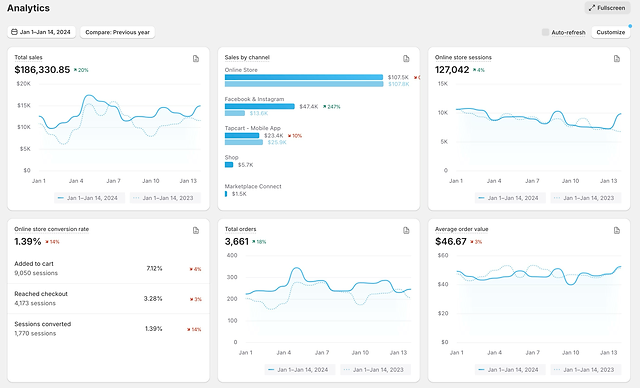
In addition to its in-built analytics, Shopify provides integration with Google Analytics and other third-party technologies for a more thorough insight of website performance. These insights are very helpful for enhancing user experience, boosting profitability, and optimizing marketing efforts.
Scalability for Growing Businesses
One of Shopify’s standout features is its scalability. Whether a merchant is just starting with a few products or expanding into a global brand with thousands of SKUs, Shopify offers the infrastructure to support growth. Shopify Plus, the enterprise-level solution, caters to high-volume businesses with advanced features like customizable checkout, automated workflows, and increased API capabilities.
As businesses grow, Shopify’s flexible pricing plans and feature sets allow them to scale without having to migrate to a new platform. This continuity and scalability make Shopify a long-term solution for businesses of all sizes.
Innovative Features and Technology
Shopify constantly innovates to stay at the forefront of eCommerce trends. With the introduction of augmented reality (AR) features, Shopify enables merchants to offer a more interactive and immersive shopping experience. Customers can visualize products in real-world environments, leading to a more engaging and informed purchase decision.
The platform has also embraced artificial intelligence (AI) to improve personalization and customer service. Shopify’s AI-powered product recommendations and chatbots enhance the shopping experience by providing personalized product suggestions and timely customer support.
Support for Drop Shipping and Print-on-Demand
Shopify has been instrumental in the rise of business models like dropshipping and print-on-demand. Entrepreneurs can start a business with minimal upfront investment by leveraging Shopify’s integration with third-party dropshipping suppliers like Oberlo and AliExpress. These models have removed the need for large inventories, making it easier for new businesses to enter the market with little risk.
Robust App Ecosystem and Customization
One of Shopify’s most significant strengths lies in its extensive app ecosystem, offering over 7,000 apps designed to enhance functionality and tailor stores to specific business needs. From apps that handle marketing automation and SEO to inventory management and customer reviews, the Shopify App Store allows merchants to add specialized features without needing custom development.
This vast ecosystem encourages businesses to create a highly personalized online store that aligns with their brand and operational needs. Whether you need to integrate a loyalty program, improve shipping logistics, or offer subscription services, Shopify’s app marketplace makes it simple to expand your store’s capabilities with just a few clicks.
This flexibility and adaptability are key reasons why Shopify continues to be a top choice for businesses of all sizes, offering a customizable platform that can grow and evolve with changing market demands.
Conclusion
Shopify has fundamentally transformed the online retail space by offering an all-in-one solution that is both accessible and scalable. Through seamless integrations, mobile optimization, and advanced technology, Shopify has enabled businesses to reach global audiences and grow rapidly. As online shopping continues to evolve, Shopify is likely to remain a key player, shaping the future of eCommerce and empowering retailers of all sizes to succeed in the digital marketplace.


